Black-Clad Dover Protesters Vow Fresh Disruptions If Police Fail
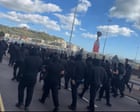
Far-right linked vigilantes threaten new Dover blockades unless authorities intensify enforcement efforts against anti-immigration demonstrations.
Masked Activists Threaten Repeat Dover Actions
The black-clad protesters who orchestrated the dramatic road blockade at Dover have warned of imminent renewed action, escalating tensions between law enforcement and activist networks. According to campaign groups monitoring the situation, the ability of these masked demonstrators to mobilise quickly and disrupt major transport routes remains a pressing concern for authorities across Kent and beyond.
Political figures and anti-extremism organisations have publicly stated that without significantly strengthened police responses, the Dover protesters represent an ongoing threat to public order and commercial activity. The demonstrations have sparked urgent discussions about protest management, surveillance capabilities, and the responsibilities of local constabularies to contain coordinated action by organised activist networks.
Patriot Platform Claims Organisational Responsibility
The group calling itself Patriot Platform has claimed responsibility for orchestrating the demonstrations, positioning itself as a defender of nationalist interests. The organisation markets itself through rhetoric emphasising homeland protection and cultural preservation, themes that resonate strongly within anti-immigration political circles.
Patriot Platform's public messaging reveals explicit connections to broader far-right activism ecosystems. The group's ability to coordinate large numbers of participants quickly demonstrates sophisticated organisational capabilities, raising questions about funding sources, communication networks, and whether official oversight bodies are adequately monitoring such movements.
Campaigners Highlight Police Response Challenges
Hope Not Hate, a leading organisation dedicated to countering extremism, has been particularly vocal in criticising what it describes as police inaction. According to the group's founder, the relative ease with which far-right linked organisations can mobilise participants at significant scale reflects inadequate law enforcement prevention strategies.
The perception among campaigners that police have been insufficiently proactive in disrupting organisational efforts has become increasingly contentious. This criticism extends beyond Dover, encompassing concerns about how various police forces nationally approach monitoring and intervention with anti-immigration movements and extremist-adjacent groups.
Political Pressure Mounts on Authorities
MPs representing affected constituencies have joined campaign groups in demanding comprehensive policy responses. The blockade disrupted normal operations at the Port of Dover, a critical maritime facility responsible for substantial international trade volume and passenger traffic between Britain and continental Europe.
Local politicians argue that such disruptions carry economic consequences extending far beyond the immediate demonstration area. Business groups have expressed frustration about the vulnerability of key infrastructure to coordinated protest action, particularly when such action originates from politically motivated networks.
The Broader Context of Anti-Immigration Activism
The Dover incident reflects escalating tensions surrounding immigration policy and national identity debates across the United Kingdom. Anti-immigration sentiment has become increasingly organised and visible, with groups adopting tactical approaches that maximise public attention and disruption potential.
Far-right linked organisations have evolved their protest strategies beyond traditional approaches, incorporating coordinated road blockades and media-savvy communications that amplify their messaging through both mainstream and social media channels. The Dover protesters demonstrated this evolution, using their visual presentation and geographic targeting to achieve significant impact.
Future Concerns and Preventative Measures
Security analysts warn that without proactive intervention, similar incidents appear likely to recur. The success of the Dover blockade in generating national news coverage potentially incentivises comparable actions elsewhere. Other strategic locations vulnerable to coordinated demonstrations include major transport hubs, government buildings, and facilities with significant symbolic resonance for activist movements.
Law enforcement agencies face complex challenges in balancing protest rights with public safety obligations. While restricting assembly rights raises democratic concerns, permitting uncontrolled demonstrations at critical infrastructure threatens economic and social stability. The Dover situation exemplifies this tension acutely.
Conclusion: Ongoing Standoff Between Activism and Authority
The threat of renewed Dover protests underscores ongoing friction between anti-immigration activist networks and governmental authorities tasked with maintaining public order. Without substantive changes to police strategy and resources dedicated to monitoring these movements, expert observers predict continued cycles of disruption. The stakes remain high for both activist movements seeking to amplify their political messaging and authorities struggling to contain coordinated large-scale demonstrations without escalating conflict or appearing to suppress legitimate protest activity.