Hamas Disarmament Initiative Presents Major Challenges But Glimmers of Hope for Gaza
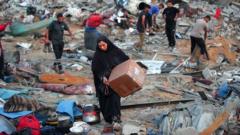
Exploring the complex path to Hamas disarmament in Gaza. Political obstacles and trust issues create barriers, yet negotiations offer potential resolution.
Hamas Disarmament Initiative Presents Complex Pathway Forward
The prospect of achieving Hamas disarmament in Gaza represents one of the most intricate diplomatic challenges facing international mediators today. While a comprehensive Hamas disarmament plan encompasses substantial obstacles rooted in political complexity, military considerations, and decades of mistrust, analysts suggest that such initiatives nonetheless provide a fragile foundation upon which sustainable peace structures might develop.
The fundamental tension surrounding Hamas disarmament in Gaza stems from the interplay between pragmatic security concerns and deeply entrenched political positions. All parties involved—Palestinian leadership, Israeli authorities, regional actors, and international stakeholders—bring competing interests and historical grievances to the negotiation table.
The Political Landscape Complicating Negotiations
Political realities present perhaps the most formidable barriers to executing any coherent disarmament framework. Hamas functions simultaneously as a political entity and a military organization, complicating efforts to separate administrative responsibilities from armed capability. The organization's dual role as both a governing body responsible for civilian administration and a militant force creates contradictions that traditional disarmament models struggle to address.
The Palestinian political spectrum itself remains fractured, with Hamas and rival factions maintaining competing visions for Gaza's governance structure. This internal division means that any agreement involving Hamas disarmament would require parallel consensus-building among Palestinian parties, a prerequisite that has historically proven elusive.
The Military Dimension and Security Verification
From a military standpoint, verifying complete Hamas disarmament presents unprecedented challenges. Underground weapons caches, distributed command structures, and the organization's decentralized operations across densely populated urban areas make comprehensive weapons accounting extraordinarily difficult. International observers would require unprecedented access and authority to conduct thorough inspections, raising questions about Palestinian sovereignty and territorial integrity.
The sheer scale of destruction across Gaza compounds these verification difficulties. The physical destruction of thousands of buildings, coupled with ongoing humanitarian crises, creates an environment where clandestine weapons stockpiles become easier to conceal and harder to detect.
The Trust Deficit Across Stakeholders
Perhaps the most intractable obstacle remains the profound absence of trust between primary actors. Decades of conflict, cycles of violence, broken agreements, and mutual accusations have created a credibility gap that extends far beyond rhetorical posturing. Hamas maintains skepticism toward Israeli security guarantees, Israel harbors doubts about Palestinian commitment to renouncing violence, and international mediators struggle to establish credible enforcement mechanisms that all parties might accept.
This zero-trust environment means that even detailed written agreements require extraordinary verification procedures and ongoing international oversight. Previous peace initiatives that failed to account for this fundamental mistrust have repeatedly collapsed when circumstances shifted or one party perceived violations from the other.
Humanitarian Consequences and Reconstruction Challenges
The humanitarian dimension cannot be separated from disarmament discussions. Gaza has experienced massive casualties and infrastructure destruction, leaving population in dire need of reconstruction, medical care, and economic rehabilitation. Any disarmament agreement would necessarily include provisions addressing these humanitarian crises, as the suffering population represents both a stakeholder group and a potential source of renewed conflict if their needs remain unmet.
Reconstruction efforts themselves create governance questions that intersect with disarmament frameworks. Who controls resource allocation? How are international aid funds administered? These practical matters directly influence whether Hamas maintains parallel authority structures or genuinely transitions toward purely political functions.
Glimmers of Hope Within the Framework
Despite these formidable obstacles, analysts identify genuine reasons for cautious optimism regarding Hamas disarmament initiatives. International diplomatic engagement has demonstrated increased creativity in designing verification mechanisms and phased implementation approaches. Regional actors show interest in stabilizing Gaza, providing potential counterbalances to parties opposed to peace frameworks.
The mutual recognition that indefinite conflict serves no party's interests creates negotiating space. Economic development, investment opportunities, and normalized regional relationships represent incentives that previous diplomatic efforts lacked. For younger Palestinians and Israelis, the costs of perpetual conflict have become increasingly apparent.
A successful Hamas disarmament framework would require unprecedented international commitment, phased implementation allowing trust-building across stages, transparent verification mechanisms accessible to all parties, and parallel investments in Palestinian governance reconstruction and economic development. While these conditions remain genuinely difficult to achieve, their specification provides a roadmap that negotiators can pursue incrementally.
The Path Forward
Movement toward Hamas disarmament in Gaza will prove neither rapid nor straightforward. The political complexities, military realities, humanitarian considerations, and fundamental trust deficits mean that progress will likely occur through small negotiated steps rather than comprehensive breakthroughs. Yet the existence of structured diplomatic initiatives addressing these challenges represents qualitatively different terrain than the perpetual cycles of violence that have characterized recent decades. Whether current efforts prove sufficient to overcome these obstacles remains uncertain, but the attempt itself signals that stakeholders increasingly recognize the alternative—continued conflict—as genuinely unsustainable.


