Hamas Disarmament Plan Offers Path to Gaza Peace Despite Major Hurdles
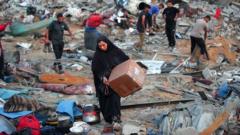
Explore how a potential Hamas disarmament plan could reshape Gaza's future, balancing hope against political obstacles and security challenges in the region.
Hamas Disarmament Initiative: A Complex Route to Stability
A proposed Hamas disarmament plan represents a significant turning point in efforts to establish lasting peace in Gaza, though the pathway remains fraught with substantial political and practical obstacles. This initiative, while presenting unprecedented opportunities for regional stabilization, must navigate through decades of mistrust, military infrastructure, and deeply entrenched positions among all stakeholders involved in the ongoing conflict.
Understanding the Current Landscape
The complexities surrounding any Hamas disarmament plan extend far beyond theoretical discussions. The political environment in the region remains highly polarized, with multiple actors holding competing interests and security concerns. The accumulated toll of military operations has left thousands deceased and vast areas of Gaza devastated, creating an atmosphere where trust between parties remains virtually nonexistent.
Security experts emphasize that a Hamas disarmament plan cannot be implemented in isolation. Instead, it requires parallel progress on governance structures, humanitarian relief, and economic reconstruction initiatives that address the root causes of conflict and instability in the territory.
Obstacles to Implementation
Several formidable challenges threaten to derail the Hamas disarmament plan before meaningful progress can occur. The first involves verifying compliance—establishing independent mechanisms to confirm that militant organizations have genuinely surrendered their arsenals rather than simply relocating them.
Political resistance presents another significant barrier. Various factions maintain competing visions for Gaza's governance and regional power dynamics. International actors hold divergent strategic interests, complicating consensus-building around any disarmament framework.
The destruction across Gaza has created additional complications. Infrastructure damage, displacement of populations, and humanitarian crises demand immediate attention, potentially diverting resources and political will away from disarmament negotiations.
Reasons for Cautious Optimism
Despite these substantial hurdles, the Hamas disarmament plan offers genuine hope for transformative change. Historical precedents demonstrate that seemingly impossible conflicts can be resolved when all parties recognize mutual benefits from peaceful coexistence over continued hostility.
The plan's potential benefits extend beyond security considerations. Regional stability could attract international investment, facilitate humanitarian assistance, and create conditions for economic development that might address underlying grievances fueling extremism.
The Path Forward
Successfully implementing a Hamas disarmament plan requires unprecedented cooperation among international mediators, regional governments, and local stakeholders. Phased approaches might prove more viable than attempting comprehensive agreements immediately.
Trust-building measures, confidence-building agreements, and international oversight mechanisms could address verification concerns while gradually reducing tensions. Economic incentives tied to disarmament progress might encourage compliance from militant organizations.
The success of any Hamas disarmament plan ultimately depends on whether all parties genuinely prioritize peace over prolonged conflict. While obstacles remain substantial, the framework for dialogue now exists where once there was only opposition.


