Andy Burnham Attributes UK Economic Fragility to Conservative Governance
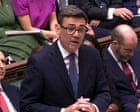
Labour PM Andy Burnham holds Tory legacy responsible for UK economic vulnerability during first PMQs clash with Kemi Badenoch as borrowing costs surge.
Labour Leader Holds Conservative Party Accountable for Economic Exposure
During his inaugural prime ministers' questions confrontation with opposition leader Kemi Badenoch, Andy Burnham made a pointed assertion regarding UK economic vulnerability. The Labour chief executive attributed the nation's susceptibility to financial market disruptions directly to the Conservative Party's administrative record, while simultaneously drawing attention to the rising trajectory of the country's borrowing expenses on international markets.
The exchange marked a significant political moment as Burnham responded to Badenoch's attempts to draw parallels between current market pressures and the tumultuous period surrounding Liz Truss's controversial mini-budget announcement. Rather than accepting this comparison, Burnham reframed the discussion to emphasize what he characterized as systematic failures within the preceding administration's economic stewardship.
The Conservative Leadership's Economic Record Under Scrutiny
The newly elected Prime Minister contended that the Conservatives' inability or unwillingness to implement meaningful measures targeting sustainable growth represented a fundamental weakness in the nation's economic foundation. According to Burnham's argument, this structural deficit rendered the British economy particularly susceptible to external market pressures and volatility that might otherwise be manageable for a more robustly positioned nation.
This assertion came as UK borrowing costs experienced an upward movement in financial markets, adding tangible weight to the discussion of economic vulnerability. The timing of these market movements during the early stages of Burnham's tenure created a particularly urgent context for his remarks about the inherited economic condition.
Contrasting Interpretations of Market Pressures
The Conservative opposition's attempt to invoke comparisons with the Truss administration—a period widely acknowledged as economically destabilizing—represented a strategic rhetorical move. However, Burnham's response demonstrated a different analytical framework, one that located the fundamental causes of contemporary economic fragility not in recent policy decisions but in longer-term structural inadequacies.
The distinction between these interpretative positions holds substantial implications for how voters and economists evaluate responsibility for the nation's current financial position. Burnham's approach essentially argued that while specific policy decisions might generate short-term market reactions, the deeper problem lay in the foundational economic weaknesses that accumulated over years of Conservative governance.
Debt Accumulation and Growth Deficits
A central element of Burnham's critique focused on what he identified as the Conservative government's failure to address two interconnected challenges: adequate economic growth and mounting national debt levels. The Prime Minister's position suggested that these twin issues created a vulnerability matrix wherein external shocks—whether stemming from international financial conditions, geopolitical events, or market sentiment shifts—could generate disproportionate impacts on the British economy.
This analysis reflects broader economic understanding regarding the relationship between debt levels, growth trajectories, and economic resilience. Nations with strong growth records and manageable debt-to-GDP ratios typically demonstrate greater capacity to weather market disruptions without experiencing cascading negative consequences throughout their financial systems.
The Significance of Early PMQs Exchanges
The nature and content of prime ministers' questions sessions frequently establish rhetorical frameworks and political narratives that extend far beyond the parliamentary moment itself. Burnham's decision to emphasize inherited economic vulnerability rather than engaging directly with Badenoch's Truss comparison suggested a deliberate strategy of recontextualizing the political debate around broader systemic issues.
The first substantive clash between a new Prime Minister and opposition leader carries particular weight in Westminster politics, often providing early indications of how each will approach their respective roles and what themes will dominate coming parliamentary confrontations. Burnham's focus on structural economic weakness inherited from the previous administration signaled that accountability for long-term economic management would feature prominently in his political messaging.
Market Reactions and Economic Reality
The concurrent movement in UK borrowing costs added empirical credibility to the parliamentary debate. When gilt yields and other borrowing cost indicators shift during political transitions, they reflect market participants' assessments of economic policy direction and fiscal stability. The upward pressure on borrowing costs during this period suggested that financial markets maintained concerns about the sustainability of the British economic position regardless of which political party held executive authority.
This reality created a complex dynamic wherein both the government and opposition had stakes in demonstrating competence regarding economic management and market confidence restoration. Burnham's strategy of blaming inherited conditions served multiple purposes simultaneously: it acknowledged the genuine economic challenges facing his administration while deflecting responsibility toward the previous government and establishing a baseline from which his own economic achievements might be subsequently measured.
Looking Forward: Economic Policy Priorities
The exchange between Burnham and Badenoch during this initial PMQs session likely previewed themes that would dominate parliamentary discourse in coming months. How the new administration addressed growth imperatives, managed debt trajectories, and responded to market pressures would substantially determine whether Burnham's attribution of vulnerability to conservative legacy proved accurate or whether opposition critics successfully reframed responsibility for ongoing economic challenges.
The broader political context matters considerably in evaluating these competing narratives about economic causation and responsibility. Voters and market participants alike would observe whether the new government's policies generated the growth acceleration and financial stability that Burnham's analysis implicitly promised could flow from moving beyond the previous administration's approach.